Ilana’s ruse to draw Gideon back into contact
Black BoxIlana’s ruse to draw Gideon back into contact begins as an appeal for help with Boaz, but becomes a confession about the desire concealed inside that appeal. In her February 1976 letters, Ilana Sommo gives Alexander Gideon an accurate account of their son’s crisis while admitting that she does not truly expect him to solve it. The practical emergency is both real and a means of reopening contact after seven years of silence; beneath it lies her wish to put herself in Alexander’s hands and receive a response, even if that response takes the form of a bill or contempt.
The appeal and its immediate occasion
The surviving letter is dated 5 February 1976 and addresses Alexander as Alec. Ilana begins by imagining that he might destroy the envelope on recognizing her handwriting. If he reads on, she suggests, curiosity may have proved stronger than hatred—or hatred may simply need new fuel. The opening makes their estrangement part of the appeal itself: before she describes Boaz, she evokes the hostile attention she expects her letter to command.
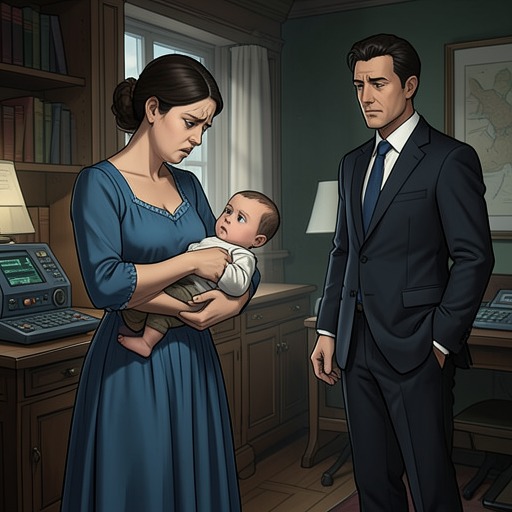
The crisis is specific. Boaz, now sixteen, has been told he will be expelled from boarding school after an incident involving a woman teacher. Ilana goes to the school, but Boaz refuses to see her and sends word that he wants nothing to do with her. The school declines to provide details. Ilana learns that he had made a sick joke, the teacher slapped him, and he immediately hit her twice in return. She pleads for time to make other arrangements, and the school grants her a fortnight before expulsion.
The letter does not present Ilana and Michel Sommo as having no possible response. Michel says Boaz can stay with them, although they and their baby live in only one and a half rooms and are still repaying the mortgage. Ilana nevertheless believes Boaz will refuse: he loathes both her and Alexander. Nor does another vocational school seem available, given Boaz’s police record and the probation officer monitoring him. The request to Alexander follows from this narrowing set of options, but it also follows from the history between the former spouses that makes his involvement emotionally charged.
A factual account with a concealed design
Ilana later insists that the details in her first two letters of February were accurate. Boaz’s trouble was not fabricated, and she had not lied about the circumstances that she brought to Alexander’s attention. Her admission concerns the purpose of the letters: truthful information served a design whose apparent practical aim was not its whole meaning. This distinction makes the ruse more complicated than a simple false alarm. The emergency is genuine; the deception lies in allowing the appeal for rescue to stand for her deeper wish.
She says she was certain from the beginning that Michel, rather than Alexander, would rescue Boaz. She also believed that Michel would do what was right, at the right time and in the right way, even without Alexander’s money. In the outcome she describes, that expectation proves correct. Alexander’s resources are therefore not the decisive solution to Boaz’s predicament, even though the crisis gives Ilana a credible reason to write to him.
Ilana’s judgment of Alexander sharpens the difference between the aid she ostensibly seeks and the person she is trying to reach. She believes that, even if he tried to help Boaz, he would not know where to begin. In her account, he relies on his checkbook and on transatlantic calls to Manfred Zakheim, government ministers, or generals from his former circle. The accusation turns the appeal into a test of Alexander’s limits: his power can travel through money and influential contacts, but, as Ilana sees it, it cannot readily become direct, practical care.
The desire beneath the request
Ilana names her real motive as a desire to place herself in Alexander’s hands. She imagines their former intimacy through the image of a damsel sending a distant knight the sword with which he can slay a dragon and free her. The fantasy makes Alexander both rescuer and potential destroyer, while casting Ilana as someone who knowingly invites the danger of his power. Her teasing picture of him in a black robe and cowl continues that charged, theatrical imagining rather than offering a straightforward request for reconciliation.
She then gives the desire a more concrete form: she wanted Alexander to send her the bill, because she was longing to pay. The image converts money from mere assistance into a means of renewed connection. Payment would let her accept a debt to him and keep their encounter alive; it would not, however, mean that she believed his money could do what Michel had done for Boaz. The contrast between Michel’s practical rescue and Alexander’s imagined bill exposes the difference between the stated emergency and the personal transaction Ilana yearns for.
Silence as the anticipated answer
The letters repeatedly stage Alexander’s response before any actual reply is reported. Ilana imagines him alone at a black desk in a long, book-lined room, snow plains beyond the window and a fire beside him. She pictures him crumpling the letter and shooting it into the fire, then hearing him dismiss her as someone trying another trick. The imagined room is starkly black and white, and its emptiness mirrors the emotional distance she attributes to him. These scenes are not evidence that Alexander actually burns or answers the letter; they are Ilana’s projection of the refusal she expects.
Her later explanation makes that expectation explicit. She says she knew he would not come, and that she would receive neither a physical blow nor an order to report, but an arctic gust of silence or, at most, venomous contempt. She recalls having endured seven years of his silence and giving in during the eighth. The structure of her confession therefore reverses the apparent direction of the appeal: she writes as if asking Alexander to act for Boaz, while understanding that the act she most wants is his return to contact. By the end, the ruse has not brought a reunion into view. It has exposed the distance between Ilana’s longing and her knowledge of Alexander’s likely response, leaving the letter itself as an attempt made in the expectation of silence.